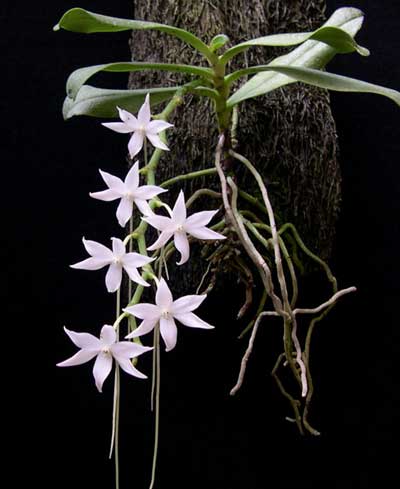

🌿 General Information
Aerangis is a genus of approximately 60 species of epiphytic orchids, mainly native to sub-Saharan Africa and also found in Asia. They are elegant plants, with fleshy grayish-green stems and alternate, thick, dark green leaves, often adorned with characteristic silvery dots. In spring or autumn, they produce long inflorescences laden with round, fragrant flowers — white, cream, or light pink — with a long spur. Their compact size makes them perfect for growing on bark. 🌸
☀️ Exposure
Aerangis love light, but not direct sun: in the hottest hours, it could cause burns on the leaves. The ideal temperature is between 15 and 18°C, but they are quite adaptable plants — they tolerate short periods below 10°C in winter and peaks above 30°C in summer. Good air circulation is essential for their well-being. On days with extreme temperatures, it's better to keep them indoors. 🏠
💧 Watering
From March to November, keep the substrate slightly moist, without ever leaving water stagnation — orchids do not tolerate it. From December to February, reduce watering and wait for the appearance of new spring shoots before resuming the normal rhythm. Frequently mist the leaves with demineralized water and fertilize every 20-25 days with a specific orchid fertilizer. At the end of the growing season, space out waterings for about two months. 🌱
🪵 Substrate and Repotting
In nature, Aerangis grow clinging to tree trunks. To replicate these conditions, use a mix of finely chopped bark, small pieces of sponge or polystyrene, and sphagnum moss. Repot every 2-3 years: the plants grow quickly, fill the available space, and the substrate tends to degrade over time, losing its supportive function. ♻️