🌳 Description
-
Scientific name: Lecanopteris mirabilis
-
Genus: Lecanopteris
-
Indoor use: Ornamental foliage fern for a bright environment without direct sunlight, with high humidity and air circulation. It is important to avoid proximity to radiators or other sources of dry air.
-
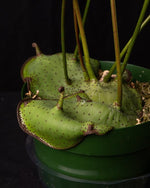
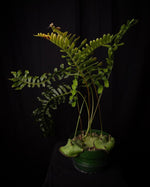
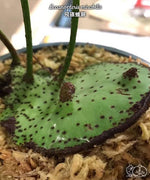
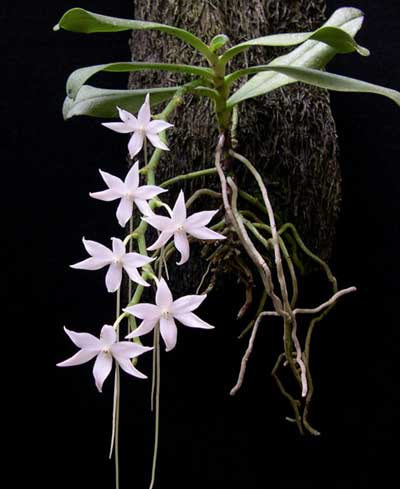
Key features: Epiphytic tropical fern of the ant fern group, appreciated for the appearance of its foliage and rhizome. It is not an orchid and does not produce flowers.
-
Flowering: Absent: like other ferns, it reproduces by spores.
🌞 Light exposure
Place in diffused light, sheltered from direct sunlight, which can damage the fronds.
Observe the plant when the season changes: a suitable position in winter may receive too much sun in summer. Increase the light gradually, avoiding sudden moves into full sun.
🚿 Watering
Maintain regular moisture, allowing the surface of the substrate to dry slightly before watering again. Avoid waterlogging and standing water in the saucer.
Before watering, check the moisture level inside the container as well, not just on the surface. After watering, allow excess water to drain and empty the saucer.
🌡️ Minimum tolerable temperature and growing temperature
Prefer mild and stable conditions, high ambient humidity, and air circulation. Avoid cold drafts and proximity to heat sources that dry out the air.
🌱 Soil type and repotting
Use a porous and well-draining substrate suitable for epiphytic ferns, with components that retain moisture without compacting. Repot when the material degrades or the container no longer adequately accommodates the growth.
The container must allow drainage and not be disproportionate to the root system. During repotting, remove the degraded material without damaging the healthy roots.
🌿 Fertilization
Apply a diluted fertilizer during growth, without overdoing it and without applying it to completely dry roots.
Do not increase the concentration to compensate for slow growth: light, temperature, and root condition must be adequate before intensifying fertilization.
✂️ Pruning or other recommended horticultural treatments
Remove completely dry fronds with clean tools, preserving those that are still green. Do not damage the rhizome during maintenance operations.
💧 Ambient humidity
Prefers a humid environment without stagnant air. Ventilation should be gentle but regular: maintaining humidity does not mean leaving the substrate constantly saturated or the fronds always wet.
The plants have damaged leaves