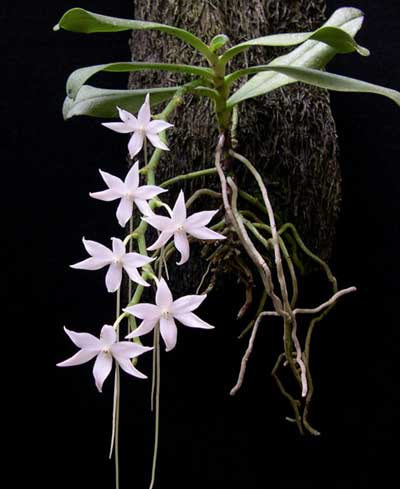
🌳 Description
-
Scientific name: Neofinetia falcata 'Raikoumaru' 雷紅丸
-
Family: Orchidaceae
-
Genus: Neofinetia / Vanda
-
Home use: Ornamental orchid to be grown in a bright, well-ventilated position. The arrangement must allow the roots to receive air and dry out between waterings.
-
Key features: Vanda falcata hybrid with flowers in shades of purplish-red and light purple. It is a selection cultivated for its flower colour.
🌞 Light exposure
Prefer bright but filtered light, protecting the plant from the strong midday sun. Gradually adapt the plant to any increases in light.
Observe the plant when the season changes: a suitable position in winter may receive too much sun in summer. Increase the light gradually, avoiding sudden moves into full sun.
🚿 Watering
Water thoroughly during growth and allow the roots to dry out between waterings. Reduce watering during cooler periods, without keeping the support constantly wet.
Before watering, check the moisture level inside the container, not just on the surface. After watering, allow excess water to drain away and empty the saucer.
🌡️ Minimum tolerable temperature and growing temperature
Adjust watering and ventilation according to the season. Avoid frost, sudden fluctuations and waterlogging between the leaves.
When temperatures drop and growth slows, water less frequently. Hybrid forms and individual selections may react differently to cool conditions: do not impose a cold rest or prolonged drought without observing the plant's response.
🌱 Soil type and repotting
Use a very airy substrate for epiphytic orchids, or an arrangement in sphagnum that does not remain compact and saturated. Repot when the material breaks down or the root system requires it.
The container must allow drainage and not be disproportionate to the root system. During repotting, remove the broken-down material without damaging the healthy roots.
🌿 Fertilisation
During growth, use a lightly concentrated orchid fertiliser. Reduce fertiliser during the winter rest period.
Do not increase the concentration to compensate for slow growth: light, temperature and root health must be appropriate before intensifying fertilisation.
✂️ Pruning or other recommended horticultural treatments
Remove only dry or deteriorated parts, preserving the healthy roots. Ensure air circulation and regularly check the moisture of the support.
💧 Ambient humidity
Maintain good ambient humidity along with constant air circulation. Air humidity must not result in constantly wet roots: after each watering, it is important to allow the support to dry out.
Pot shown in the photo not included.