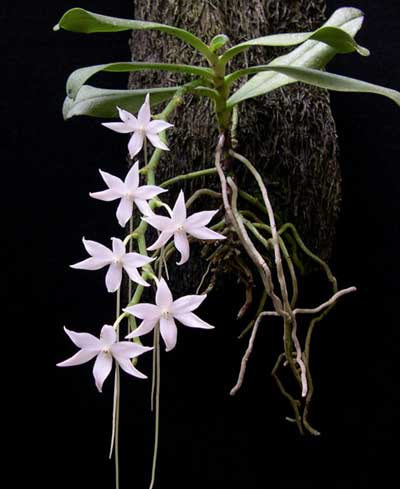
🌳 Description:
-
Scientific name: Renanthera Seet Kim Soh (Renanthera monachica × Renanthera coccinea).
-
Family: Orchidaceae.
-
Genus: Renanthera, an intergeneric hybrid.
-
Origins: A hybrid obtained in cultivation from Renanthera monachica, native to the Philippines, and Renanthera coccinea, from tropical Asia. The indicated commercial origin is Thailand.
-
Home cultivation: An orchid with a vertical habit that should be displayed in a very bright and well-ventilated environment, allowing space for the growth of the stem, aerial roots, and large inflorescences.
-
Key characteristics: Monopodial growth, with leathery leaves arranged in two rows and robust aerial roots. It combines the more compact influence of monachica with the vigor of coccinea; it produces branched inflorescences with flowers in shades of red and orange, sometimes mottled. Color, size, and branching may vary among specimens of the same cross.
-
Average adult size: A medium-to-large plant, approximately 60–120 cm tall, potentially larger in older specimens. Flowers approximately 3–5 cm; the inflorescences extend beyond the foliage.
-
Flowering: Branched lateral inflorescences with numerous flowers, generally during the bright season; the period varies with the growth cycle and cultivation conditions.
-
Fragrance: Fragrant according to the information on the sheet; intensity may vary among specimens.
🌞 Light exposure: Medium-to-high light, intense and well-ventilated. Introduce gentle morning sun gradually, shielding it from the stronger midday sun, especially in summer. A position that is too shaded may limit flowering; avoid suddenly exposing an acclimating plant to the sun.
🚿 Watering: Water regularly throughout the year, allowing the roots to dry between waterings. When grown with exposed roots, watering may be frequent during warm periods, but must be followed by good aeration. Preferably use rainwater or low-mineral water. It does not require a dry rest; at lower temperatures or during slowed growth, water less frequently according to how dry the roots actually become. Avoid stagnant water at the tip and in the leaf axils overnight.
🌡️ Minimum tolerable temperature and cultivation temperature: Intermediate-to-warm cultivation, approximately 22–30 °C during the day and 16–20 °C at night. Prudently maintain at least 15 °C and avoid prolonged cold with wet roots. In intense heat, promote ventilation and ambient humidity, protecting the leaves from overheating.
🌱 Soil type and repotting: Requires very well-aerated roots: suitable supports for epiphytes, open baskets, or coarse bark in highly draining containers. Repot approximately every 2–3 years or when the growing medium deteriorates; only intervene on supports when necessary. Preferably repot during the period when new roots are emerging and limit handling of the root system.
🌿 Fertilization: Apply a low-concentration orchid-specific fertilizer every two weeks during active growth to roots that are already moist. Alternate with water-only waterings to limit salt buildup. Reduce when growth slows; for plants with compromised roots, maintain particularly cautious dosages.
✂️ Pruning or other recommended horticultural treatments: Remove completely dried flower stems and only dead or rotting roots with clean tools. Do not cut the growing tip or remove healthy aerial roots. During acclimation, keep the plant stable, avoiding frequent moving and handling.
💧 Ambient humidity: Approximately 60–80%, accompanied by constant air circulation. Adequate humidity limits the dehydration of exposed roots, but does not replace watering. Avoid stagnant air and constantly wet foliage.
The dimensions are purely indicative and refer to an adult plant.
⚠️ Warning about the plants for sale: recently imported plants, with an imperfect root system and in the acclimation phase; not yet fully stabilized. They require particular attention to the balance between hydration and ventilation.